Blockchain Technology: The Foundation of the Next Digital Revolution
In today's rapidly evolving digital world, businesses require secure, transparent, and efficient systems to manage data, transactions, and operations. Traditional centralized systems often struggle with security vulnerabilities, data manipulation, and high operational costs. Blockchain technology addresses these challenges by providing a decentralized, immutable, and highly secure digital infrastructure.
At Leamsoft Pvt. Ltd., we believe blockchain is more than cryptocurrency—it is a transformative technology capable of reshaping industries ranging from finance and healthcare to supply chain management, real estate, education, and government services.
What is Blockchain?
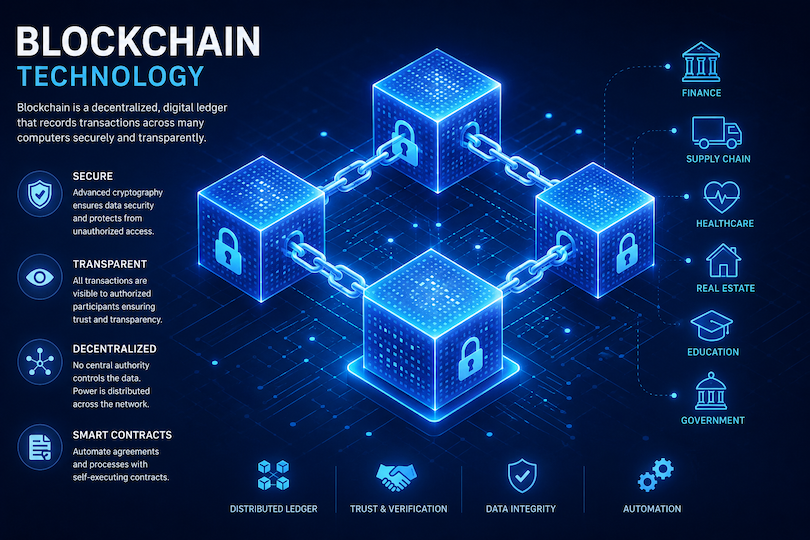
Blockchain is a decentralized digital ledger that records transactions across multiple computers in a secure and tamper-resistant manner. Instead of relying on a central authority, every participant in the network maintains a synchronized copy of the ledger.
Each block contains:
- Transaction data
- Timestamp
- Cryptographic hash
- Hash of the previous block
These interconnected blocks create a permanent chain of records that cannot be modified without network consensus, making blockchain one of the most secure data management technologies available today.
How Blockchain Works
Blockchain operates through a sequence of secure processes:
1. Transaction Initiation
A user initiates a digital transaction, such as transferring assets, recording data, or executing a contract.
2. Network Verification
The transaction is validated by participating nodes using predefined consensus mechanisms.
After verification, the transaction is grouped with other validated transactions into a new block.4. Block Addition
The verified block is cryptographically linked to the previous block and permanently added to the blockchain.
5. Distributed Synchronization
Every participant receives the updated ledger, ensuring complete transparency and consistency.
Key Features of Blockchain Technology
Decentralization
No single organization controls the entire network, reducing dependency on centralized servers and minimizing failure risks.
Security
Advanced cryptographic algorithms protect data from unauthorized access, fraud, and cyberattacks.
Transparency
Every approved participant can verify transactions, creating trust and accountability across the network.
Immutability
Once recorded, blockchain data cannot be altered or deleted, ensuring reliable historical records.
Automation Through Smart Contracts
Smart contracts automatically execute predefined conditions, reducing manual intervention and operational costs.
Business Benefits of Blockchain
Organizations adopting blockchain gain several competitive advantages:
Enhanced Data Security
Sensitive business information remains protected through encrypted and distributed storage.
Reduced Operational Costs
Automation eliminates intermediaries, reducing processing expenses and administrative overhead.
Faster Transactions
Cross-border payments and digital asset transfers can be completed significantly faster than traditional systems.
Improved Traceability
Every transaction can be tracked throughout its lifecycle, making blockchain ideal for logistics and supply chain management.
Increased Customer Trust
Transparent operations build confidence among customers, partners, and stakeholders.
Blockchain Applications Across Industries
Financial Services
Banks and fintech companies use blockchain for secure payments, fraud prevention, digital identity verification, and asset management.
Supply Chain Management
Businesses can monitor products from manufacturing to delivery while ensuring authenticity and reducing counterfeit risks.
Healthcare
Hospitals securely store medical records, simplify patient data sharing, and maintain compliance with privacy regulations.
Real Estate
Property ownership, land records, and digital agreements become more transparent and efficient.
Education
Academic certificates and credentials can be securely verified without relying on paper documentation.
Government
Blockchain improves transparency in public records, voting systems, taxation, and digital identity management.
Retail & E-commerce
Businesses improve inventory tracking, customer loyalty programs, payment processing, and product authenticity verification.
Smart Contracts: Automating Business Processes
Smart contracts are self-executing digital agreements stored on a blockchain. They automatically perform actions once predefined conditions are satisfied.
Common business use cases include:
- Vendor payments
- Insurance claim processing
- Escrow services
- Digital licensing
- Subscription management
- Automated compliance workflows
This reduces paperwork, minimizes human error, and accelerates business operations.
Common Blockchain Platforms
Businesses choose blockchain platforms based on scalability, performance, and project requirements.
Popular enterprise platforms include:
- Ethereum
- Hyperledger Fabric
- Polygon
- Solana
- Binance Smart Chain
- Avalanche
- Polygon CDK
- Quorum
Each platform offers unique advantages depending on the application's complexity and business objectives.
Why Businesses Are Investing in Blockchain
Digital transformation is no longer optional. Organizations seek technologies that improve operational efficiency while maintaining security and transparency.
Blockchain enables businesses to:
- Build trusted digital ecosystems
- Secure valuable business data
- Automate workflows
- Reduce fraud
- Improve regulatory compliance
- Create innovative digital products
- Support Web3 initiatives
- Strengthen customer relationships
As industries continue embracing decentralization, blockchain is becoming a strategic investment rather than an experimental technology.
Why Choose Leamsoft Pvt. Ltd. for Blockchain Development?
At Leamsoft Pvt. Ltd., we develop secure, scalable, and business-focused blockchain solutions tailored to your organization's goals.
Our blockchain development services include:
- Custom Blockchain Development
- Smart Contract Development
- NFT Marketplace Development
- Cryptocurrency Wallet Development
- Enterprise Blockchain Solutions
- Web3 Application Development
- Token Development
- Blockchain Consulting
- DeFi Solutions
- API Integration
- Security Auditing
- Ongoing Maintenance & Support
We combine technical expertise with modern development practices to deliver reliable blockchain applications that support long-term business growth.
Conclusion
Blockchain technology is redefining how businesses exchange information, manage assets, and establish trust in the digital economy. Its combination of security, transparency, decentralization, and automation makes it one of the most influential technologies of the modern era.
Whether you're launching a startup, modernizing enterprise infrastructure, or exploring Web3 opportunities, blockchain provides the foundation for innovative, secure, and scalable digital solutions.
Partner with Leamsoft Pvt. Ltd. to transform your business with next-generation blockchain technology and build solutions ready for the future.